Field Tracers
Exploring vector fields , volumes / vdb and a pipeline between houdini and C4D, rendered with octane and comped in After Effects

comped passes from octane and grading

I started by testing some vdb operations in C4D r20
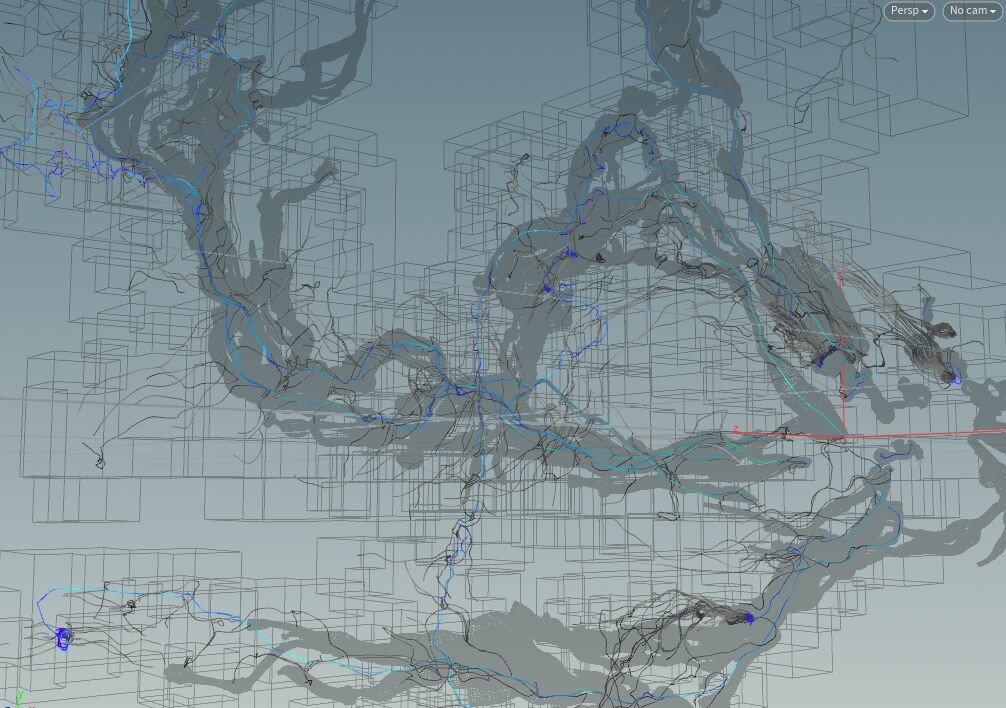
I then decided to create the source geometry in Houdini, buy combining volume trail nodes

doing some remeshing in c4d and trying subtraction and reshaping of different components

displacer with source geo field falloff


first comped octane tests

depth pass test, time to move on.

decided to start a new model, this time do the meshing in houdini

vdb and meshing operations are much faster in Houdini :)


generate and sim a few frames of volume around the geo, this part was way too heavy to simulate and I had to settle with a lower res volume, the final render suffered because of that, I got some tips on approaching this better next time.

I used octane hair render to make the scene more manageable

raw render from octane with the terribly ugly low res volume. takes around 2 hours on 1x 2070, but I think I could have optimized it more